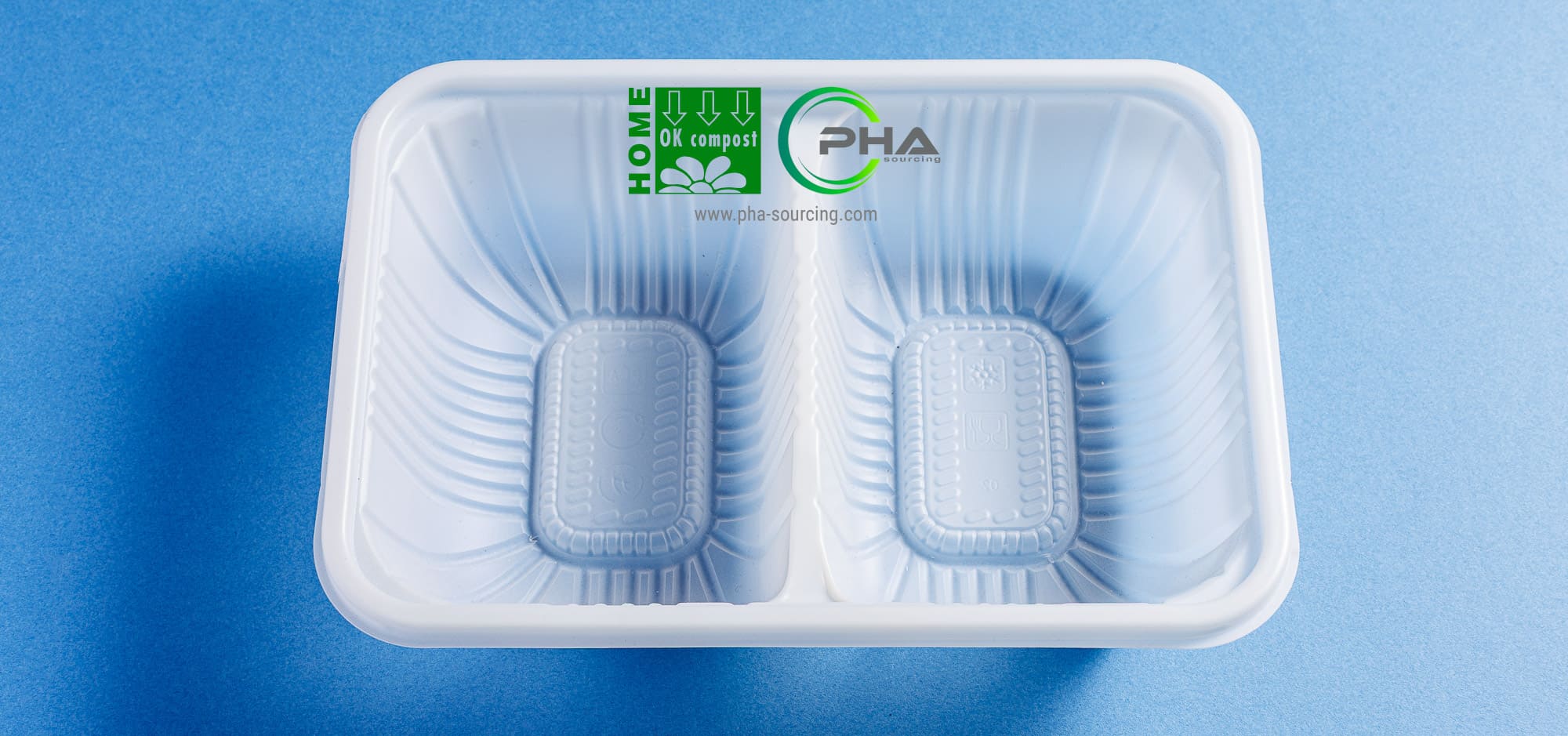
Brazil is becoming an important test market for PHA food trays, as food retailers, food service operators and packaging converters look for alternatives to conventional PET and PP trays. According to Index Box, the country’s market is still emerging but is expected to expand rapidly through 2035, supported by plastic restrictions, sustainability commitments and growing interest in marine-biodegradable packaging. For industrial buyers, the trend highlights a broader shift: certified, bio-based and compostable materials are moving from niche trials toward commercial packaging programs.
Why Brazil Is Accelerating Demand for PHA-Based Food Packaging
Regulation is pushing brands beyond conventional plastics
Brazil’s market for microalgae-based PHA food trays is being shaped by a combination of state-level plastic restrictions and corporate sustainability goals. Index Box reports that São Paulo, Rio de Janeiro and Bahia are among the states creating regulatory pressure on single-use plastic packaging, especially in food service and retail channels. This is encouraging packaging teams to evaluate alternatives that can support more credible environmental claims.
For B2B buyers, the main takeaway is clear: material selection is becoming a compliance and reputation issue, not only a packaging cost issue. Food contact performance, compostability certification and documentation for green claims are increasingly important in procurement decisions. PHA is positioned as a relevant option because it is a bio-based polymer family known for biodegradability, including in natural environments when properly formulated and certified for the target application.
Food retail and food service are leading early adoption
The report identifies fresh produce trays, ready-to-eat meal containers, takeaway packaging, meat and seafood trays, bakery clamshells, meal kits, airline catering and events as relevant use cases. Fresh produce packaging appears especially suitable for early adoption because performance requirements are generally less demanding than for high-barrier applications such as meat or seafood.
This matters for converters and brands because early commercial volumes often start where technical risk is lower and sustainability value is visible to consumers. As trials mature, the market can then move toward more demanding formats, including multilayer structures or fiber-reinforced formulations. For companies sourcing PHA materials, this creates opportunities to test specific grades, validate thermoforming behavior and build a packaging roadmap by application.
Market Growth Is Strong, But Supply Constraints Remain
The Brazilian market could grow from approximately USD 18-25 million and 1,200-1,500 metric tons in 2026 to USD 180-280 million and 8,000-12,000 metric tons by 2035. This represents a projected CAGR of 28-34%, provided that domestic production capacity expands and import dependence is gradually reduced.
Brazil is still highly dependent on imported PHA resin
Index Box estimates Brazil’s market for zero waste food tray microalgae PHA at approximately USD 18-25 million in 2026, with volume around 1,200-1,500 metric tons. The report also states that imports account for more than 75% of supply, as domestic production remains limited to pilot-scale activity. This import dependence affects lead times, inventory planning and price stability for converters.
For industrial buyers, supply continuity should therefore be part of every sourcing discussion. Beyond price per kilogram, procurement teams need to assess resin availability, technical support, certification status, food contact documentation and the converter’s ability to process the material consistently. In a market where demand is projected to grow quickly, reliable sourcing can become a strategic advantage.
The market remains structurally import-dependent, with imported PHA resin and compounded pellets representing more than 75% of total supply in 2026. For industrial buyers, this creates a clear need to secure reliable sourcing, anticipate lead times and validate alternative supply routes before scaling packaging programs.
Processing performance is central to adoption
The report notes that thermoforming-grade PHA copolymer blends are gaining traction because they can improve processability and impact resistance compared with pure homopolymer trays. This reflects a key reality for packaging manufacturers: sustainability alone is not enough. Materials must run on industrial equipment, meet dimensional requirements and control scrap rates.
PHA-based trays may require adapted tooling, lower processing temperatures or longer cooling cycles compared with conventional plastics. That means successful adoption depends on close coordination between resin suppliers, compounders, sheet extruders, thermoformers and brand owners. For buyers, the best approach is to validate the complete value chain before scaling: formulation, sheet extrusion, tray forming, filling line compatibility, storage, logistics and end-of-life communication.
What This Means for Industrial Buyers
PHA can support premium sustainable packaging strategies
The Brazilian market shows how certified compostable packaging is becoming a commercial differentiator in food retail and food service. PHA-based materials are particularly relevant where brands want to move beyond paper-based substitutions or oxo-degradable materials and toward solutions with stronger environmental positioning.
However, the report also highlights cost challenges. Imported thermoforming-grade PHA remains more expensive than conventional PET and PP. As a result, the strongest opportunities are likely to be in premium produce, export-oriented food packaging, coastal applications, sustainability-led food service programs and brands with clear environmental commitments. These are segments where packaging can contribute directly to brand value and regulatory readiness.
Procurement should focus on documentation, certification and scalability
Industrial buyers evaluating PHA food trays should look beyond material claims and request application-specific evidence. Important criteria include food contact suitability, compostability certification, biodegradability substantiation, formulation consistency, resin traceability and converter experience. In Brazil, the report also points to the growing importance of substantiated environmental claims, which makes documentation essential for avoiding greenwashing risks.
For companies planning a transition, a phased sourcing strategy is recommended: start with pilot trays for lower-risk applications, confirm converter performance, review certification needs, then scale to higher-volume formats. PHA Sourcing can support B2B buyers looking to integrate PHA materials into packaging projects, from material selection to industrial supply planning.
PHA food trays are still an emerging market in Brazil, but the direction is clear: regulation, brand commitments and consumer expectations are pushing food packaging toward certified, bio-based and biodegradable alternatives. Companies that start material validation now can prepare for future packaging requirements while building a more credible sustainability offer. Contact PHA Sourcing to discuss PHA-based materials for your next packaging project.